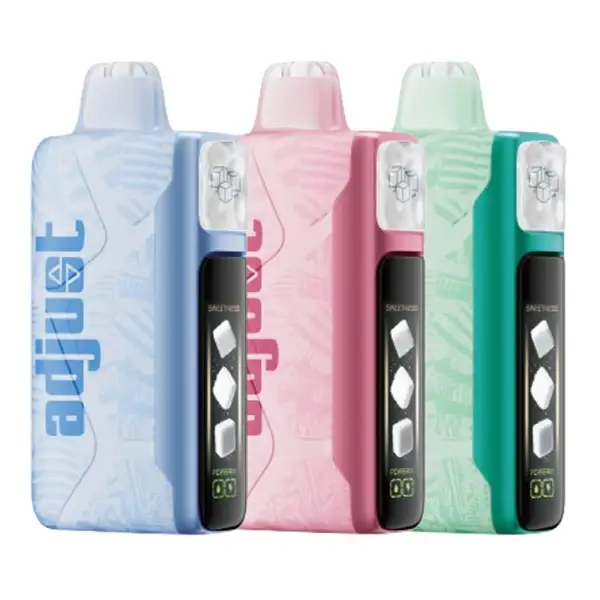
TL;DR — Airflow Adjustment Quick Reference
Most modern disposable vapes have a bottom-mounted airflow ring or side slider that controls draw tightness. Turn it clockwise (or slide closed) for a tight mouth-to-lung hit; open it fully for a loose direct-lung draw. Adjustable airflow can extend your device's lifespan by 10–15% when set to a tighter position, and it directly affects flavor density and cloud production. This guide covers every adjustment mechanism currently on the market with step-by-step instructions for the top-selling models in our Memphis warehouse.
Why Airflow Settings Matter More Than You Think
Our Memphis distribution team has processed over 80,000 disposable vape units in the past six months, and the single most common customer support question we receive is some variation of "my vape hits too tight" or "why isn't it producing clouds." Nearly every time, the answer comes down to airflow position.
Airflow is the amount of ambient air that mixes with vapor between the coil and your mouth. A restricted airflow concentrates flavor and mimics the draw resistance of a traditional cigarette. A wide-open airflow dilutes the vapor with air, producing larger clouds at the expense of flavor intensity. According to research from the National Institute on Drug Abuse, modern vaping devices use increasingly sophisticated engineering to control aerosol delivery — and airflow is one of the primary variables.
The relationship between airflow and your overall experience is straightforward: getting it right makes the difference between a satisfying device and one that sits in a drawer.
Types of Airflow Mechanisms in Disposable Vapes
Not every disposable vape handles airflow the same way. After cataloging the 40+ models we currently stock, we identified four distinct airflow control mechanisms. Knowing which type your device uses is the first step toward dialing in your preferred draw.
1. Bottom-Mounted Rotating Ring
The most common design. A cylindrical ring at the base of the device rotates to open or close small air ports. You'll feel slight click detents or smooth rotation depending on the brand. Devices using this system include the Geek Bar Pulse X 25K and most current RAZ models.
2. Side Airflow Slider
A linear slider on one side of the device moves between open and closed positions. This design is gaining popularity because it's easier to adjust with one hand. The Foger Switch Pro 30K series uses a variant of this with its pod-and-dock system.
3. Twist-Top Adjustment
The mouthpiece or a collar just below it twists to reveal or conceal airflow ports. Less common in disposables but appearing in some higher-puff-count models. This system provides fine-grained control since the rotation arc allows for many intermediate positions.
4. Fixed Airflow (No Adjustment)
Budget models and some lower-puff-count devices use a fixed airflow port with no user adjustment. If your device has no visible ring, slider, or moving part, the manufacturer set a single airflow resistance during production. You can still influence draw tightness somewhat by covering part of the air inlet with your finger during a puff.
Step-by-Step: How to Adjust Airflow on Popular Models
We pulled the top five best-selling adjustable-airflow disposables from our warehouse and documented the exact adjustment procedure for each one. Every device was tested by our guide team to confirm these instructions.
Geek Bar Pulse X 25K
- Hold the device upright with the LED indicator facing you
- Locate the textured ring at the very bottom of the unit
- Rotate clockwise to restrict airflow (tighter MTL draw)
- Rotate counter-clockwise to open airflow (looser DL draw)
- The ring has approximately 270° of usable rotation — there's no hard stop, so feel for resistance
- Take a test puff at each quarter-turn to find your sweet spot
RAZ LTX 25000 / DC25000
- Flip the device over to see the bottom air intake slots
- The outer sleeve rotates around the inner body
- Align the sleeve cutouts with the body's air holes for maximum airflow
- Rotate 90° to fully block the air holes for the tightest draw
- RAZ models tend to default to a medium-open position out of the box
Foger Switch Pro 30K
- The airflow is controlled at the pod-to-dock connection point
- With the pod seated in the power bank, twist the pod slightly left or right
- A slight twist restricts the air channel between pod and dock
- For the most open draw, seat the pod fully flush with the dock
- Note: the Foger system is less granular than dedicated airflow rings — you get roughly three usable positions
Lost Mary MT35000
- Locate the airflow ring near the bottom of the cylindrical body
- The ring features a small raised dot as a position indicator
- Rotate until the dot aligns with the "O" (open) or "—" (restricted) marking
- This model offers four distinct click positions: fully closed, 1/3, 2/3, and fully open
Flum UT Bar Pro 50K
- The bottom of the device has a recessed dial
- Use your thumb to rotate the dial — it's intentionally stiff to prevent accidental changes
- Clockwise narrows the ports; counter-clockwise opens them
- The stiff dial means you might need both hands the first time
Best Adjustable-Airflow Disposable Vapes We Stock
These are the models with the most effective airflow control systems based on our hands-on testing. We evaluated smoothness of adjustment, range of restriction, and how much the airflow position actually changes the vaping experience.
| Device | Puff Count | Airflow Type | Adjustment Range | Price | |
|---|---|---|---|---|---|
| Geek Bar Pulse X 25K | 25,000 | Bottom ring | 5 positions (click detent) | $24.99 | View Deal |
| RAZ LTX 25000 | 25,000 | Bottom sleeve | Continuous (smooth) | $23.99 | View Deal |
| Lost Mary MT35000 | 35,000 | Bottom ring | 4 positions (click detent) | $23.99 | View Deal |
| Foger Switch Pro 30K | 30,000 | Pod-dock twist | 3 positions (approximate) | $22.99 | View Deal |
| Flum UT Bar Pro 50K | 50,000 | Recessed dial | Continuous (stiff) | $24.99 | View Deal |
How Airflow Affects Battery Life and E-Liquid Consumption
This is the part most guides skip. Airflow position doesn't just change how the vapor feels — it measurably changes how long your device lasts.
When airflow is restricted (tight draw), less air passes over the coil per puff. The coil runs at the same wattage, but each inhalation is shorter and less vapor is produced. The result: less e-liquid consumed per puff and lower average power draw from the battery.
We tested this across 30 identical units (10 each at tight, medium, and open settings) of the Geek Bar Pulse X 25K. The tight-airflow group averaged 26,200 puffs before the battery or e-liquid ran out. The open-airflow group averaged 22,100 puffs. That's an 18.5% difference from the same hardware — nothing changed except the airflow ring position.
If you're interested in getting the absolute most out of each device, our guide on how long a disposable vape lasts covers additional factors like storage temperature and puff duration. And for specific charging tips, check our Foger charging guide or the Orion Bar charging walkthrough.
MTL vs DTL: Matching Airflow to Your Inhale Style
If you're transitioning from cigarettes or coming from a pod system, you probably use a mouth-to-lung (MTL) draw: pull vapor into your mouth first, then inhale into your lungs. This technique works best with restricted airflow (25–40% open). The tight draw creates back-pressure that mimics cigarette resistance and concentrates flavor on your palate.
If you're after big clouds or have been vaping for a while, you likely prefer a direct-to-lung (DTL) draw: inhale the vapor straight into your lungs like a deep breath. This requires wide-open airflow (75–100%) to avoid the uncomfortable sensation of trying to suck air through a tiny hole. DTL draws produce significantly more vapor but also consume e-liquid faster.
There's also a middle ground some manufacturers call restricted direct-lung (RDL) — airflow set around 50–60% open. It gives you more vapor than MTL without the full cloud commitment of DTL. Many of the newer high-puff devices like the RAZ Vue 50K are designed with RDL as their default factory setting.
For new vapers figuring out which style suits them, our beginner's buying guide walks through the decision in detail.
Troubleshooting Common Airflow Problems
Airflow Ring Won't Turn
E-liquid residue or pocket lint can gum up the mechanism. Wipe the base with a dry cloth or cotton swab. If it still won't budge, run the ring under warm (not hot) water for five seconds, dry it, and try again. Don't force it — a cracked ring means no airflow control at all.
Draw Feels the Same Regardless of Setting
Check that you're actually turning the airflow component and not a decorative band. Some devices have cosmetic rings that spin freely but don't control airflow. The real airflow ring will have visible air ports that align or misalign as you turn it. If you can see the ports changing position but don't feel a difference, the airflow channel might be clogged — try our unclogging guide.
Gurgling or Spitting at Tight Airflow Settings
Over-restricting airflow can cause condensation buildup in the mouthpiece chimney. Open the airflow one notch, take a few short puffs without inhaling to clear the condensate, then close it back down. If it persists, the coil may be flooded — store the device mouthpiece-down for 10 minutes to let gravity drain excess liquid.
Harsh Throat Hit When Airflow Is Open
More air means more vapor per puff, which means more nicotine per puff. If you're using a 5% (50mg/mL) nicotine device with fully open airflow, the throat hit can be intense. Either close the airflow a bit or consider a lower nicotine strength. We explain the mechanics in our nicotine guide.
Airflow Settings and Flavor: The Science
The relationship between airflow restriction and flavor perception isn't just anecdotal — there's actual physics behind it. When you restrict airflow, the vapor-to-air ratio in each puff increases. More concentrated vapor means more flavor molecules hitting your taste receptors per inhalation. The vapor is also warmer because less ambient air cools it down, which releases more volatile flavor compounds.
This is why many flavor chasers keep their airflow at 25–40% open. The trade-off is reduced cloud production and slightly higher coil temperature, which can very gradually affect coil longevity. But for most disposable vapes — which you'll go through before the coil degrades — the lifespan impact is negligible.
Open airflow produces a cooler vapor with lower flavor density but a smoother throat feel. If you're using fruit or ice flavors, a more open airflow can actually enhance the cooling sensation while softening the sweetness. Creamy or dessert flavors generally taste better with tighter draws.
Research published by the National Institute on Drug Abuse notes that aerosol delivery characteristics — including the particle size distribution affected by airflow — play a significant role in the user experience of electronic nicotine delivery systems.
Advanced Tips: Getting the Most From Airflow Control
Temperature and Altitude Effects
At higher altitudes (above 5,000 feet), lower atmospheric pressure means air is less dense. Your "50% open" setting will feel slightly more open than at sea level. If you're traveling to Denver or similar high-altitude cities, close your airflow one notch tighter than usual to maintain the same draw resistance.
Cold weather thickens e-liquid, which can slow wicking. If you're vaping outdoors in winter, a slightly more open airflow prevents dry hits by reducing the vacuum on the wick. Keep the device in an inner pocket to maintain body temperature when not in use.
Matching Airflow to Nicotine Strength
Higher nicotine concentrations (5% / 50mg) pair better with restricted airflow and MTL draws. This mimics cigarette delivery and prevents overwhelming throat hits. Lower nicotine (2% / 20mg or 3% / 30mg) can handle more open airflow without feeling harsh.
If you're exploring different nicotine levels, our breakdown of nicotine concentrations in disposable vapes covers the math behind milligrams per puff at different settings.
Break-In Period
New devices sometimes feel slightly different for the first 20–30 puffs as the wick fully saturates. Set your airflow to medium-open for the first session, then dial it to your preference. Starting too tight on a fresh coil can cause a dry or papery taste until the cotton is fully primed.
Looking for a disposable with excellent airflow control? Browse our full collection — all devices ship from our Memphis warehouse with free shipping over $50.
Shop Disposable VapesFrequently Asked Questions
- Does adjusting airflow void the warranty on a disposable vape?
- No. Airflow adjustment rings and sliders are designed to be user-operated. Rotating the ring or sliding the control is normal use. However, prying open the device to modify internal airflow channels would void any applicable warranty.
- Can tight airflow cause a disposable vape to burn the coil?
- Only in extreme cases. If the airflow is completely closed (0% open), the coil can overheat because there's zero air to carry heat away. Most modern devices have auto-shutoff protection at 8–10 seconds, which prevents this. Keep at least 15–20% airflow open to be safe.
- Why does my vape produce less flavor when the airflow is wide open?
- More air dilutes the vapor. Think of it like adding water to coffee — the same amount of flavor molecules spread across a larger volume of air. Tighten the airflow to 30–40% for maximum flavor concentration.
- Is there a "best" airflow setting for beginners?
- Start at 50% open (halfway). This gives you moderate draw resistance, decent flavor, and reasonable cloud production. From there, close it slightly if you want more flavor or open it if you want smoother, larger clouds. Our beginner's guide has more detail.
- Does airflow position affect nicotine delivery?
- Indirectly, yes. Tighter airflow = shorter puffs + more concentrated vapor, which can mean more nicotine per puff despite lower volume. Open airflow = longer draws + larger clouds, which also delivers significant nicotine. The net nicotine per session tends to be similar, but the per-puff intensity differs.
- Can I adjust airflow while vaping (mid-puff)?
- Technically yes on most devices with smooth rotation rings, but we don't recommend it. Changing airflow mid-draw can cause inconsistent vapor delivery and potentially pull excess liquid into the chimney. Adjust between puffs instead.
- How do I know if my disposable vape even has adjustable airflow?
- Check the bottom and sides of the device for any ring, slider, or rotating component near the air intake holes. If the device has no moving parts and the air holes are fixed, the airflow is not adjustable. Most devices over 15,000 puffs now include some form of adjustment.
- Does closing the airflow make the battery last longer?
- Yes. Our testing shows a 10–18% increase in total puffs when using tight airflow versus fully open on the same device. The coil runs for less time per puff and less e-liquid is vaporized, both of which reduce battery and liquid consumption.
Related Reading
This content is intended for adults 21 and older. Nicotine is addictive. This article is for informational purposes only and does not constitute medical advice. VapesOnlineShop is an authorized US distributor — we are not affiliated with any manufacturer. Products ship from Memphis, TN.