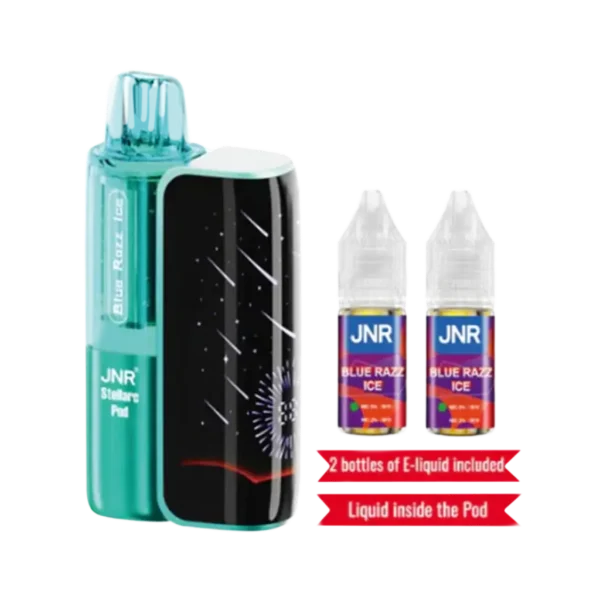
JNR's e-liquid formula follows the same four-ingredient structure as most premium vape brands: propylene glycol, vegetable glycerin, nicotine salt, and food-grade flavorings. What distinguishes JNR from many competitors is a sugar-free formula — no sucralose or other sweeteners — and TPD/MHRA certification on all products. This page breaks down exactly what's inside JNR vapes, explains what each ingredient does, addresses common safety questions, and compares JNR's composition to other brands like Foger, RAZ, and Geek Bar.
What's Inside JNR E-Liquid — Full Ingredient List
| Ingredient | Role | Approx. % | Safety Classification |
|---|---|---|---|
| Propylene Glycol (PG) | Flavor carrier, throat hit | ~50% | FDA GRAS for ingestion |
| Vegetable Glycerin (VG) | Vapor production, smoothness | ~50% | FDA GRAS for ingestion |
| Nicotine Salt | Nicotine delivery | 5% (US) / 2% (EU) | Addictive substance |
| Food-Grade Flavorings | Taste profile | Trace amounts | GRAS for ingestion |
That's it — four ingredients, no fillers, no sweeteners, no vitamin E acetate, no diacetyl. JNR's official ingredient disclosure aligns with their TPD and MHRA certification requirements, which mandate full composition disclosure.
Ingredient Breakdown — What Each One Does
Propylene Glycol (PG)
PG is a thin, colorless liquid that serves as the primary flavor carrier in JNR's formula. It's the ingredient responsible for delivering the taste profile of each flavor to your palate and producing the "throat hit" sensation that mimics the feel of smoking.
PG is FDA-recognized as "Generally Regarded as Safe" (GRAS) for oral consumption and is widely used in food products, pharmaceuticals, and even medical inhalers. It's in everything from ice cream to asthma nebulizers. However, GRAS status is based on ingestion studies — not inhalation. The long-term effects of inhaling PG aerosol are less well-studied, though it has been used in theatrical fog machines and medical inhalers for decades without widespread safety concerns.
Some users experience mild PG sensitivity, which typically presents as dry mouth, mild throat irritation, or occasional headaches. These symptoms are uncommon and usually resolve by switching to a higher-VG e-liquid. JNR's 50/50 ratio is a balanced middle ground — enough PG for solid flavor delivery without the irritation risk of PG-heavy formulas.
Vegetable Glycerin (VG)
VG is a thick, slightly sweet liquid derived from vegetable oils (typically palm, soy, or coconut). It's responsible for the visible vapor cloud when you exhale. The thicker the VG ratio, the denser the cloud production.
VG also softens the overall vaping experience. While PG delivers throat hit, VG smooths it out. JNR's 50/50 balance produces moderate clouds with good flavor clarity — a deliberate choice suited to the 1.2Ω dual mesh coil in JNR pods. Higher-VG formulas (70/30 or 80/20) would be too thick for JNR's auto-refill valve mechanism, potentially causing wicking failures.
Like PG, VG holds FDA GRAS status for ingestion and appears in food, cosmetics, and pharmaceutical products. It's the more "natural" of the two base ingredients in the sense that it's plant-derived, though both PG and VG undergo industrial processing.
Nicotine Salt
JNR uses nicotine salt — not freebase nicotine — in all products. The distinction matters for how the nicotine feels when you inhale it.
Freebase nicotine (used in traditional cigarettes and older-generation vapes) has a higher pH, which creates a harsh throat hit at high concentrations. Most freebase e-liquids top out at 12–18mg/mL before becoming uncomfortably harsh.
Nicotine salt is freebase nicotine combined with an organic acid (typically benzoic acid) to lower the pH. This produces a smoother throat hit at higher concentrations, which is why JNR can deliver 50mg/mL (5%) nicotine without the burning sensation you'd get from the same concentration in freebase form. The lower pH also allows faster nicotine absorption into the bloodstream, creating a satisfaction curve closer to combustible cigarettes.
JNR's US Edition contains 5% nicotine salt (50mg/mL). The EU Edition contains 2% (20mg/mL), compliant with TPD limits. The pods are region-locked — US and EU pods are not interchangeable, and the nicotine strength is printed on every pod and bottle.
Important: Nicotine in any form is highly addictive. Nicotine salt's smoother delivery can make high concentrations feel less intense than they are, which may increase dependency risk for new users. JNR vapes are intended for adult smokers and existing nicotine users, not for non-smokers or minors.
Food-Grade Flavorings
JNR uses proprietary food-grade flavoring compounds to create its 10 US flavors. The exact formulations are not publicly disclosed — this is standard across the vape industry, as flavor recipes are treated as trade secrets. What JNR does disclose: all flavorings are food-grade quality and contain no diacetyl.
Diacetyl is a butter-flavored compound that was linked to "popcorn lung" (bronchiolitis obliterans) in factory workers who inhaled large quantities in popcorn manufacturing. While the amounts found in early vape products were far lower than occupational exposure levels, reputable brands have eliminated diacetyl entirely as a precautionary measure. JNR confirms diacetyl-free formulation across all products.
The "GRAS for ingestion" caveat: Food-grade flavoring compounds are tested and classified as safe for eating, not for inhalation. Inhaling vaporized flavorings may carry different risks than swallowing them. This is an area of ongoing research, and no definitive long-term safety data exists for inhaled food flavorings. This caveat applies to all vape brands, not just JNR.
JNR's Sugar-Free Formula — Why It Matters
Many vape brands add sucralose (artificial sweetener) to their e-liquids to enhance perceived sweetness. It's the ingredient responsible for the candy-like intensity in brands like Foger and many RAZ flavors. JNR does not use sucralose or any other sweetener.
This matters for three practical reasons:
Coil longevity: Sucralose caramelizes on the heating coil during vaporization, creating a dark, crusty buildup (commonly called "coil gunk"). This buildup degrades flavor quality and eventually kills the coil. JNR's sugar-free formula avoids this — coils stay cleaner longer, which is why JNR pods deliver ~7,500–8,500 puffs compared to 4,000–5,000 on sweetened competitors. For more detail, see our pod replacement guide.
Flavor accuracy: Without sucralose masking the base flavors, JNR's fruit profiles taste more natural and less candy-like. Blue Razz Ice tastes like blue raspberry rather than blue raspberry candy. Whether you prefer this is subjective — some vapers love the candy-sweetness of sucralose-heavy brands, others find it cloying. JNR's approach appeals to vapers who want cleaner, more authentic fruit notes.
Potential health considerations: While sucralose is FDA-approved for ingestion, vaporizing and inhaling sweeteners is a less-studied pathway. Some researchers have raised preliminary concerns about thermal decomposition of sucralose at vaping temperatures, though evidence is limited and inconclusive. JNR's decision to omit sweeteners sidesteps this question entirely.
How JNR Compares to Other Brands
| JNR | Foger | RAZ | Geek Bar | |
|---|---|---|---|---|
| Base Ingredients | PG, VG, nic salt, flavorings | PG, VG, nic salt, flavorings | PG, VG, nic salt, flavorings | PG, VG, nic salt, flavorings |
| PG/VG Ratio | 50/50 | Not disclosed | Not disclosed | Not disclosed |
| Nicotine (US) | 5% (50mg/mL) | 5% | 5% | 5% |
| Sugar-Free | ✅ Yes | ❌ No | ❌ No | ❌ No |
| Diacetyl-Free | ✅ Yes | ✅ Yes | ✅ Yes | ✅ Yes |
| TPD/MHRA Certified | ✅ Yes | Varies by region | Varies by region | ✅ Yes |
| Ingredient Disclosure | Full (4 ingredients listed) | Partial | Partial | Full |
The core ingredients are identical across all four brands — every major US vape brand uses the same PG/VG/nicotine salt/flavorings base. The meaningful differences are in the details: JNR's confirmed sugar-free formula, disclosed 50/50 PG/VG ratio, and TPD/MHRA certification provide more transparency than average.
Certifications and Compliance
TPD (Tobacco Products Directive): The EU's regulatory framework for tobacco and nicotine products. TPD compliance requires full ingredient disclosure, nicotine limits (20mg/mL max in EU), child-resistant packaging, specific health warnings, and notification to health authorities before market entry. JNR's EU Edition products hold TPD certification.
MHRA (Medicines and Healthcare products Regulatory Agency): The UK's regulatory body for e-cigarettes, operating under TRPR (Tobacco and Related Products Regulations). MHRA notification requires manufacturers to submit product composition data, emission testing results, and toxicological reports. JNR products are MHRA-notified for the UK market.
US FDA: As of 2026, the US vape market operates under PMTA (Premarket Tobacco Product Application) requirements. The regulatory landscape continues to evolve. JNR products are available in the US through authorized retail channels that comply with federal and state regulations, including age verification requirements.
What certifications mean in practice: TPD and MHRA certification mean that a third-party regulatory body has reviewed JNR's ingredient list, manufacturing process, and emission data. It does not mean the products are "safe" — no nicotine product is. It means the products meet defined regulatory standards for composition, labeling, and quality control.
Common Safety Questions
Is JNR vape safe?
No nicotine product is "safe." JNR vapes contain nicotine, which is addictive, and inhaling any aerosol carries potential lung health risks that are not yet fully understood over decades of use. What the available evidence suggests: vaping products like JNR are generally considered by public health bodies to be significantly less harmful than combustible cigarettes, because they eliminate combustion and the thousands of toxic byproducts it creates. Public Health England's frequently cited estimate is that vaping is around 95% less harmful than smoking, though this figure has been debated. JNR's sugar-free, diacetyl-free formula and TPD/MHRA certifications place it among the more transparent products on the market, but transparency is not the same as safety.
Does JNR contain vitamin E acetate?
No. Vitamin E acetate was identified by the CDC as the primary cause of the 2019 EVALI (e-cigarette or vaping product use-associated lung injury) outbreak. It was found predominantly in illicit THC cartridges, not commercial nicotine vapes. JNR does not use vitamin E acetate or any oil-based additives in its e-liquid. Legitimate, commercially available nicotine vapes from established brands have not been linked to EVALI.
Is the nicotine in JNR synthetic or tobacco-derived?
JNR uses tobacco-derived nicotine salt. Some brands have switched to synthetic (tobacco-free) nicotine to navigate regulatory distinctions, but JNR's current formulation uses traditional tobacco-extracted nicotine protonated with organic acid. Chemically, synthetic and tobacco-derived nicotine are identical — the distinction is regulatory, not pharmacological.
Can JNR's e-liquid cause allergic reactions?
PG sensitivity affects a small percentage of users and can cause dry mouth, throat irritation, or mild headaches. True PG allergy is rare but not impossible. If you experience persistent irritation, consult a healthcare provider. VG sensitivity is extremely uncommon. Flavoring compounds can theoretically trigger reactions in individuals with specific sensitivities, but this is rare with food-grade formulations.
Is JNR's 50/50 PG/VG ratio better than other ratios?
Not inherently better — it's optimized for JNR's specific hardware. The 50/50 ratio balances flavor clarity (PG strength) with smooth vapor production (VG strength) and matches the viscosity requirements of JNR's auto-refill valve system. Higher-VG ratios produce bigger clouds but mute flavor; higher-PG ratios intensify flavor but increase throat harshness. For JNR's pod system, 50/50 is the engineering sweet spot.
Are JNR ingredients different between US and EU editions?
The base ingredients (PG, VG, flavorings) are the same. The difference is nicotine concentration: US Edition is 5% (50mg/mL), EU Edition is 2% (20mg/mL) per TPD limits. Flavor profiles may also differ slightly between regions, as some flavoring compounds approved in the US may not be permitted under EU regulations, and vice versa. The US Edition's flavor lineup is curated specifically for the American market — see JNR Vape Flavors for the full US list.
The Bottom Line
JNR's ingredient profile is clean and transparent by industry standards. Four ingredients, no sweeteners, no diacetyl, TPD/MHRA certified. The sugar-free formula is a genuine differentiator that affects both practical performance (longer coil life) and flavor character (more natural taste). But "cleaner than competitors" is not the same as "safe" — vaping any nicotine product carries inherent health risks, and long-term inhalation data simply doesn't exist yet for any brand. If you're a current smoker considering switching, JNR's composition represents the type of product public health bodies suggest as a harm-reduction alternative. If you don't currently use nicotine, there's no health-based reason to start.
- JNR Vape — Complete Brand Guide
- JNR Vape Flavors — Complete List & Rankings
- JNR Stellarc 100K Review
- JNR P5 GlassRock Review
- JNR Vape Pods — Replacement & Refill Guide
- JNR Vape Near Me — Where to Buy
- JNR vs Foger Vape Comparison
- How to Use JNR Vape
- JNR Vape Price — Cost Comparison
- Shop P4 Stellarc Kit
- Shop P5 GlassRock Kit